
Non-GAMSTOP Curaçao Casino Sites: UK Rules
 Available in GB
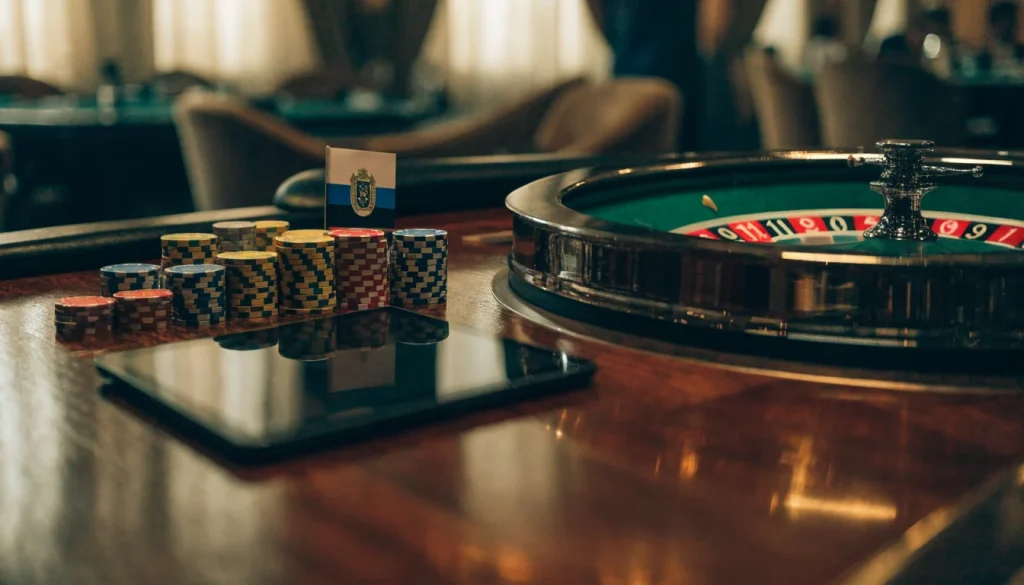
UK rules depend on serving the British market, while Curaçao licensing and payment claims need operator-level evidence.
Table of Contents
- What the UK Rules Establish About Online Casino Access
- How GAMSTOP Self-Exclusion Works
- What GAMSTOP Does Not Cover
- What Can Be Verified About Curaçao Casino Licensing
- Why a Ranked Curaçao Casino Shortlist Cannot Be Substantiated
- Bitcoin Payments: What the Evidence Does and Does Not Show
- Safety and Self-Exclusion at Non-GAMSTOP Casinos
- Crypto Licensing Claims Require Operator-Level Evidence
- Trustly, GAMSTOP and the Limits of Available Information
- No Verified Basis for a Top Curaçao Casinos List
- Safer Gambling
What the UK Rules Establish About Online Casino Access
Online casino access in the United Kingdom is governed by rules that distinguish between a player’s location and an operator’s location. For customers in England, Scotland and Wales, a business offering real-money gambling must hold the relevant licence from the UK Gambling Commission (UKGC). That requirement applies to remote operators serving the British market even when the business is based elsewhere. A site’s location or the way it describes its services does not, by itself, establish that it may lawfully offer gambling to people in Great Britain.
The Gambling Act 2005 provides the main statutory framework for gambling in England, Wales and Scotland. It defines a casino by reference to arrangements that give people an opportunity to take part in casino games. Online gambling is lawful in the UK when it is offered through a properly licensed and regulated site; the minimum age for online gambling is 18. These are general rules about the market, not a finding about the status or accessibility of any individual website.
Safe Online Casinos in the UK: Licence Checks
This distinction matters when considering online casinos associated with Curaçao. The rules establish what an operator must hold when it serves customers in Great Britain, but they do not determine whether a particular Curaçao-based site is operating, accepting customers, or correctly licensed elsewhere. Nor does a foreign location remove the UK requirement for an operator selling into the British market to hold a UKGC licence. Any conclusion about an individual site would require evidence about that operator, rather than an inference from the words “Curaçao casino” or from its advertised location.
The UKGC licensing framework also sets conditions for regulated online gambling. Operators must verify a customer’s age before allowing deposits into a gambling account. They must offer responsible-gambling tools, including self-exclusion, and provide access to an internal complaints process and an approved Alternative Dispute Resolution service. These requirements form part of the protections attached to UK licensing; they should not be assumed to apply to a site merely because it accepts online customers or uses familiar casino branding.
Casinos That Bypass GamStop: UK Rules and Risks
Specific product rules also apply to licensed remote operators in Britain. Online slots cannot offer autoplay, and each slot spin must last at least two and a half seconds. Maximum stakes per game cycle depend on age: the limit is £5 for adults aged 25 and over and £2 for customers aged 18 to 24. The £5 limit for all adults took effect on 9 April 2025. These rules illustrate that UK regulation covers how gambling products operate, as well as whether an operator is authorised to serve the market.
Payment rules provide another example of the difference between a general market rule and an individual site’s payment options. Remote gambling operators cannot accept credit-card payments for gambling, including credit-card funding routed through a money service business. They also cannot accept wallet payments where the wallet allows credit-card funds to be used for gambling. These restrictions concern credit-card funding; they do not establish which payment methods any particular Curaçao-associated casino offers.
Self-exclusion has a defined place within this regulatory framework. GAMSTOP is the national online self-exclusion scheme for Great Britain. The Gambling Commission made participation compulsory for online operators from 31 March 2020. This establishes a requirement for online operators within the relevant UK regulatory system; it does not mean that GAMSTOP is a universal block on every gambling website worldwide. The scheme’s operation and the limits of its reach are separate matters from the licensing rules that govern which operators may serve Great Britain.
Northern Ireland is not covered by the Gambling Act 2005, which governs gambling in England, Wales and Scotland. That territorial distinction means the Act’s scope should not be described as uniform across every part of the United Kingdom. It does not alter the central point for the British market: remote gambling operators serving customers in England, Scotland or Wales must hold the relevant UKGC licence.
Attention: A foreign location or branding does not remove the requirement for an operator serving the British market to hold a UKGC licence.
Searches for a new Curaçao casino or for the best online casino associated with Curaçao do not change these legal requirements. A name, launch claim, overseas location or product description is not a substitute for establishing the operator’s regulatory position. The UK rules provide the standard against which service to the British market is assessed; they do not, on their own, verify individual sites or rank them.
How GAMSTOP Self-Exclusion Works
GAMSTOP is a free, multi-operator self-exclusion service for online gambling. Registering is intended to prevent access to existing gambling accounts and stop new accounts being opened with UK-licensed online operators during the chosen exclusion period. The process puts a single request across participating operators rather than requiring a separate request to each one.
Registering with GAMSTOP
Registration involves providing personal information so that identity can be confirmed. This information enables the scheme to match a registration with gambling accounts held by participating operators. Accurate details matter: if the information supplied does not identify the account holder correctly, an operator may not be able to associate the exclusion with that person.
The registration process also requires a choice of exclusion duration. The available fixed periods include six months, one year and five years. The selected period determines how long the exclusion remains in force; it is not a temporary pause that ends simply because a person changes their mind during that time. The registration is complete when GAMSTOP confirms it.
Online Casinos in the UK: Assessing Trustworthiness
The sequence is therefore straightforward in principle: identify the person registering, select an exclusion period, submit the request and receive confirmation. GAMSTOP’s service is free. The restriction applies across participating licensed online gambling websites and apps, rather than being limited to one account with one operator.
What the exclusion changes
Once registered, a person is blocked from accessing current gambling accounts or creating new ones with the operators covered by the scheme for the selected period. This is intended to reduce the practical opportunity to gamble online through those accounts. It is a formal self-exclusion measure, not merely a preference setting or a reminder to take a break.
The scheme works across multiple operators, which distinguishes it from asking one casino to close a single account. A person can also request self-exclusion directly from an individual online gambling business. That route concerns the particular business contacted; GAMSTOP is the route for a multi-operator request across participating licensed online operators.
The phrase “non-GAMSTOP” is sometimes used for casinos outside the scheme, including in searches for Curaçao casinos. That label does not describe how to register with GAMSTOP or alter an active registration. The GAMSTOP process is for self-exclusion from participating licensed online operators, and a Curaçao casino’s licensing or participation status cannot be inferred from the label alone.
Choosing and confirming an exclusion
The duration should be considered before the request is submitted. The available choice is a fixed exclusion period, so the registration should not be treated as a short-lived pause. Confirmation provides an indication that the request has been recorded; the exclusion then operates through the participating operators covered by the scheme.
Registering with GAMSTOP
Identify the person
Provide personal information so that identity can be confirmed and matched with gambling accounts.
Select duration
Choose a fixed exclusion period of six months, one year, or five years.
Submit and confirm
Submit the request and wait for GAMSTOP to confirm the registration.
A request to one casino remains distinct from registration with GAMSTOP. If a person uses only an individual operator’s process, the exclusion is directed to that business. If the purpose is to exclude across multiple participating online operators, GAMSTOP provides the multi-operator route. These processes should not be conflated: a single account closure is not equivalent to a GAMSTOP registration.
GAMSTOP does not require a person to contact each participating operator separately to make the multi-operator request. Its function is to communicate the exclusion across the participating network. This makes it a central mechanism for online self-exclusion, while the exclusion period selected at registration supplies the fixed timeframe for the restriction.
For people considering whether to use the scheme, its purpose is to create a barrier between the registrant and covered online gambling accounts. It does not make the decision to stop gambling on someone’s behalf; it records a formal request and applies the resulting restriction across participating operators. The value of the process rests on the registration being made with correct personal details and on the selected exclusion period being understood as a fixed commitment.
GAMSTOP’s role is specific: it provides a free, centralised way to self-exclude from participating licensed online gambling sites and apps. It is not a casino, payment service or method of assessing the quality of an operator. Registering is a self-exclusion action, not a recommendation about where to gamble.
Non-Gamban Casinos in the UK: GAMSTOP Claims Explained
What GAMSTOP Does Not Cover
GAMSTOP is a multi-operator self-exclusion scheme: it blocks access to participating licensed online gambling websites and apps. Its coverage is therefore defined by the operators taking part, not by a universal block on every gambling website. The fact that a site is not covered by GAMSTOP does not establish that it is suitable or safe to use, or that it is an appropriate place to gamble during an active exclusion.
This distinction matters when considering searches for Curaçao casinos that are not registered with, or affected by, GAMSTOP. The wording describes a possible gap in scheme coverage; it does not verify the status of any particular casino. A site’s name, payment options or stated location cannot, by themselves, show whether it participates in GAMSTOP. Nor does the scheme’s limited scope amount to permission to move an account elsewhere while self-exclusion is in force.
Self-exclusion is a formal agreement not to gamble. Customers are refused service by the venues and websites from which they have excluded themselves, and the agreement places responsibility on the person who made it to refrain from gambling. Seeking another website to continue gambling may conflict with that commitment. Playing at a non-GAMSTOP casino could breach the terms of an active self-exclusion, so opening another account elsewhere is not a safe workaround.
Breach of Exclusion
Playing at a non-GAMSTOP casino could breach the terms of an active self-exclusion; opening another account elsewhere is not a safe workaround.
The distinction is between the reach of a particular scheme and the wider purpose of self-exclusion. GAMSTOP blocks access across its participating operators; it does not make every other gambling site part of the scheme. That does not make an outside site a substitute for the excluded accounts, or remove the need to follow the agreement. A technical ability to reach a website is not evidence that using it is consistent with self-exclusion.
Payment services do not settle the coverage question either. Searches mentioning Neteller or Skrill alongside Curaçao casinos do not establish that a specific site offers either service, or that using a payment method changes whether the operator is covered by GAMSTOP. Payment availability and self-exclusion participation are separate matters. A payment logo or deposit option cannot be treated as proof that an account is outside the terms of an exclusion.
An active exclusion should not be tested by registering with an operator outside the scheme. Doing so could expose a person to gambling in conflict with the formal agreement, rather than preserve the protection it was intended to provide. The safer interpretation is that a site outside GAMSTOP’s participating network is simply outside that scheme’s blocking mechanism; this is not an endorsement or a practical route around self-exclusion.
Accordingly, claims that Curaçao casinos are “not blocked by GAMSTOP” should be read narrowly. They describe the possible limits of a multi-operator scheme, not a verified finding about every Curaçao-branded site, its account rules, or its relationship with an individual’s exclusion. The scheme’s boundary does not cancel the agreement made with participating businesses. Where self-exclusion is active, using another gambling site to continue playing could breach its terms, and creating an account elsewhere should not be treated as a safe alternative.
Merkur Casino Online UK: Games, Licences and Demos
What Can Be Verified About Curaçao Casino Licensing
A Curaçao licence is an operator-level claim. A casino’s use of Curaçao branding, or a statement that it is licensed there, does not by itself establish which legal entity holds the licence or whether the claim applies to the site being considered. A list presented as confirmed would therefore require identifiable operators and evidence linking each operator to a current licence. Without that basis, naming casinos as verified licensees would overstate what can be established.
The distinction matters because “Curaçao-licensed” and “licensed to serve customers in Great Britain” are not interchangeable descriptions. Remote gambling operators selling into the British market must hold a licence from the UK Gambling Commission, regardless of where they are based. An offshore licence does not substitute for that UK requirement. A claim about Curaçao licensing alone consequently cannot establish that an operator is authorised to provide online gambling to people in Great Britain.
The UK rule concerning GAMSTOP is separate. From 31 March 2020, participation in the national scheme became a compulsory condition for online operators. That requirement concerns operators within the UK regulatory framework; it does not confirm the licensing status of an individual Curaçao operator. Nor does a site’s relationship to GAMSTOP prove that it holds a Curaçao licence. These are distinct questions and require separate evidence.
Licensing Distinction
An offshore licence, such as one from Curaçao, does not substitute for the UKGC licence required to lawfully serve customers in Great Britain.
A Curaçao casino licence check should therefore avoid treating a logo, a general statement on a website, or a brand name as conclusive proof. The relevant question is whether a specific operator and the specific gambling service can be connected to a valid licence. A brand may not, by itself, identify the legal entity responsible for the service, so the wording of any licensing claim matters. Where the operator and licence cannot be tied together, the status should not be described as confirmed.
This also limits what a Curaçao casino licence list can responsibly contain. A list needs named operators and a basis for describing each one as licensed; otherwise, it risks turning unsubstantiated claims into apparent facts. The same caution applies to references to Curaçao eGaming: the name of a licensing body or a reference to it does not independently verify that a particular casino holds a current licence. No operator should be presented as confirmed on that basis alone.
For people in Great Britain, the practical regulatory distinction remains the UKGC licence. Online gambling is legal only through sites holding the required UK licence. A foreign licence may describe an operator’s status elsewhere, but it does not establish permission to serve the British market. Equally, the UK’s mandatory GAMSTOP participation rule should not be used as evidence for or against the Curaçao licensing claim of a particular site.
The evidence-based position is consequently narrow: the UK requirement and the date when GAMSTOP participation became compulsory for online operators can be stated, while an individual Curaçao licence requires operator-specific substantiation. A Curaçao label alone is not enough to establish either the holder of a licence or the operator’s standing under British rules.
Why a Ranked Curaçao Casino Shortlist Cannot Be Substantiated
For UK readers considering non-GamStop Curaçao casino sites in 2026, payout information is one practical detail to review. The notes below stick to the information available for each listed operator.
1. Jetsetspins
Payout speed: 1-3 business days Jetsetspins lists a payout speed of 1–3 business days.
2. NightWin
Payout speed: 1-3 business days NightWin lists a payout speed of 1–3 business days.
3. WinBeast
Payout speed: 1-3 business days WinBeast lists a payout speed of 1–3 business days.
4. EvoSpin
Payout speed: 1-3 business days EvoSpin lists a payout speed of 1–3 business days.
5. NightLuck
Payout speed: 1-3 business days NightLuck lists a payout speed of 1–3 business days.
6. SlotoSport
Payout speed: 1-3 business days SlotoSport lists a payout speed of 1–3 business days.
7. Zombillion
Payout speed: 1-3 business days Zombillion lists a payout speed of 1–3 business days.
8. BeOnBet
Payout speed: 1-3 business days BeOnBet lists a payout speed of 1–3 business days.
9. Dieselwin
Payout speed: 1-3 business days Dieselwin lists a payout speed of 1–3 business days.
10. Chanze
Payout speed: 1-3 business days Chanze lists a payout speed of 1–3 business days.
A ranking of Curaçao casinos would require more than a collection of names. Each operator would need to be identifiable, and the same relevant information would need to be checked for every candidate. Without that basis, a “best” list would present an editorial preference as though it were a comparison supported by evidence.
The central difficulty is comparability. A meaningful assessment would need consistent details about the services offered, the terms attached to them and the protections available to customers. Those details would also need to be attributable to the specific operator being assessed, rather than inferred from a brand description or repeated from an unconfirmed listing.
The word “best” also requires a defined standard. A list might be ordered by game selection, payment options, account terms or customer protections, but those are distinct criteria. Combining them without disclosed evidence or a consistent method would obscure the basis for each position. A ranking cannot be made reliable merely by assigning numbers to entries or describing them with broad claims such as “trusted” or “popular”.
The same limitation applies to lists framed specifically for UK players or for casinos outside GAMSTOP. Those labels do not establish that a named operator offers the relevant service, that its terms have been checked, or that its position can be compared with others. Treating a category label as proof would risk turning an unverified claim into a recommendation.
A substantiated comparison would need to identify the businesses being considered and support each material claim with operator-level information. It would also need a transparent method applied consistently across the candidates, with differences in terms and protections made clear. Where those elements cannot be established, ranking the operators would give a false impression of precision.
This is why a shortlist of the best Curaçao casinos, including one presented as current for 2026, cannot responsibly be supplied on the basis of a defensible comparison. Nor would a longer list solve the problem: adding more unsubstantiated entries increases the number of claims without strengthening the comparison.
British Casinos Not on GamStop: What Licensing Means
The appropriate distinction is between describing a verifiable operator and recommending it as superior to others. A recommendation requires evidence that supports both the individual description and the comparative judgement. Without that foundation, no operator can be placed above another on a reliable basis, and a ranked shortlist would be more suggestive than informative.
Bitcoin Payments: What the Evidence Does and Does Not Show
Bitcoin acceptance cannot be attributed to Curaçao casinos as a group. A casino’s location or association with Curaçao is not, by itself, evidence of a particular payment option.
The distinction matters because a general claim that a casino “accepts Bitcoin” can conceal several separate questions: whether it can be used to fund an account, whether it can be used for withdrawals, and what transaction conditions apply. Those details should not be assumed to be the same across operators.
The UK restriction on credit-card gambling payments is a separate issue. Remote gambling operators cannot accept credit cards for gambling, including credit-card funds routed through a money service business. They also cannot accept wallet payments where the wallet permits credit-card funds to be used for gambling. These rules concern credit-card funding; they do not establish that a Curaçao casino accepts Bitcoin, nor do they verify how any cryptocurrency payment would work.
The legal framework for serving customers in Great Britain is also distinct from payment choice. Remote operators selling into the British market must hold the relevant Gambling Commission licence. A payment method does not demonstrate that an operator holds that licence or is authorised to serve the market.
Accordingly, claims about Bitcoin at Curaçao casinos require evidence tied to the individual operator and its current payment terms. A general reference to cryptocurrency, or an unqualified description of a site as a Bitcoin casino, is not enough to confirm that Bitcoin is available for a particular transaction or to establish its conditions.
Safety and Self-Exclusion at Non-GAMSTOP Casinos
Self-exclusion is a formal agreement to stop gambling with a particular business for an agreed period. Gambling businesses must offer this option by law and are required to take reasonable steps to prevent someone who has excluded themselves from gambling with them. The agreement does not remove the person’s responsibility to avoid gambling during its term.
Do
- Extend self-exclusion to every relevant venue
- Follow the formal agreement to refrain from gambling
Don’t
- Use non-GAMSTOP sites as a workaround
- Rely on payment methods to ensure safety
That distinction matters when considering a casino outside the UK’s regulatory system. A non-GAMSTOP casino may not be covered by the protections attached to participation in the UK scheme, and a Curaçao connection alone does not establish what safeguards a particular operator provides. A payment method, including a prepaid option such as Paysafecard, does not change the scope of a self-exclusion agreement or establish that an operator will uphold it.
An active exclusion should not be treated as a reason to move gambling to another site. Playing at a non-GAMSTOP casino could breach the terms of the exclusion, and opening another account elsewhere is not a safe workaround. Where gambling may be tempting, self-exclusion should extend to every relevant venue and online business, rather than only the site that prompted the decision. Account controls or payment choices are not substitutes for that broader step.
For UK-licensed casinos, age checks must take place before a customer is allowed to deposit funds. Those operators must also provide responsible-gambling tools, including self-exclusion. Such requirements do not establish that an outside casino follows the same rules. A search for safe Curaçao casinos accepting Paysafecard cannot, by itself, confirm how an individual operator handles age checks, exclusion requests or customer safeguards.
Self-exclusion is not a way to recover money already lost. The Gambling Commission regulates licensed gambling in Great Britain, but it cannot refund gambling losses. A complaint about a licensed operator may follow the operator’s complaints process and, where applicable, an approved dispute-resolution route; neither should be confused with a refund guarantee.
The practical safety question is therefore not simply whether a payment option is available. It is whether gambling is consistent with the person’s exclusion agreement and whether the protections relied upon actually apply to the business involved. If an exclusion is active, avoiding gambling elsewhere is safer than testing its boundaries.
Crypto Licensing Claims Require Operator-Level Evidence
A Curaçao casino’s acceptance of cryptocurrency and its licensing status are separate matters. A payment option does not demonstrate that an operator holds a particular licence, while a licence claim alone does not establish which currencies or payment methods the casino accepts. Both points require evidence tied to the individual business.
For customers in Great Britain, the relevant legal distinction is whether an operator holds a Gambling Commission licence to serve the market. A licence issued elsewhere does not replace that requirement. The UK regulator’s rules apply to remote operators offering gambling to consumers in Great Britain, regardless of where those businesses are based. This is distinct from the question of whether a Curaçao authority has licensed a particular operator.
The phrase “Curaçao-licensed crypto casino” can therefore combine two claims that need separate substantiation: that the named casino accepts cryptocurrency and that its stated licence is valid and applies to its operation. Without operator-specific documentation, neither claim should be treated as confirmed. A general description of a casino as crypto-focused is not evidence of its payment terms or regulatory status.
Attention: A foreign licence does not establish permission to provide remote gambling in Great Britain; only UKGC authorisation does.
The same caution applies to any statement that a site is suitable for British customers. A foreign licence does not establish permission to provide remote gambling in Great Britain. Online casinos serving this market must be authorised by the UK Gambling Commission. That market requirement remains distinct from the casino’s use of digital currencies.
Accordingly, cryptocurrency acceptance and licensing should not be inferred from one another. Claims about an individual site need to be assessed separately, and a Curaçao licence claim should not be presented as confirmation of UK authorisation.
Trustly, GAMSTOP and the Limits of Available Information
Trustly and GAMSTOP concern different parts of online gambling. Trustly is a payment method; GAMSTOP is a multi-operator self-exclusion scheme. Its block applies across participating licensed online gambling websites and apps. The presence or absence of Trustly at a casino does not determine whether that casino participates in GAMSTOP.
A Curaçao casino’s location or licensing description alone does not establish whether Trustly is offered. Payment options are specific to each operator, so a claim about Trustly acceptance needs to be tied to the particular site and its stated cashier options. A general description of Curaçao casinos cannot substantiate that a named operator supports this payment method.
The same distinction matters when a casino is described as outside GAMSTOP. That label does not show whether a particular site participates in the scheme, nor does it establish the payment methods available there. GAMSTOP’s function is to block access across participating licensed online operators; it is not a payment service or a general directory of casino accounts.
Consequently, Trustly acceptance and GAMSTOP participation should not be treated as interchangeable indicators. A site’s payment branding does not show that it is included in the scheme, and a claim that a casino is outside GAMSTOP does not confirm that Trustly can be used there. These are separate operator-level matters, and neither follows simply from describing a casino as Curaçao-based or non-GAMSTOP.
Trusted UK casinos: what licensing checks establish
The practical distinction is important because a payment option cannot change the scope of a self-exclusion agreement. GAMSTOP operates across the participating licensed websites and apps covered by the scheme; payment arrangements do not expand that coverage. Claims linking Trustly availability to GAMSTOP status therefore require evidence about the specific operator rather than assumptions based on a broad category of casinos.
No Verified Basis for a Top Curaçao Casinos List
A “top” list implies that identifiable casinos have been assessed against comparable criteria. That might include verified operator details and consistent information about the products being compared. Without those foundations, ordering names would suggest a level of evaluation that has not been established.
Naming sites from memory, promotional material or unconfirmed claims would not resolve that problem: it could attach an endorsement to an operator without establishing the details behind it.
The distinction matters because a list is more than a collection of names. Its ordering signals that one option has been judged better than another, while even an unranked selection implies that each entry has been checked against a stated standard. Neither implication is justified without reliable, comparable information.
This is not a finding that a particular casino is better or worse than another; it reflects the absence of a sound basis for making that comparison. A list would become meaningful only if operators could be identified and assessed using evidence that is consistent across entries.
The phrase “top Curaçao casinos” therefore cannot be answered responsibly with a set of names alone. A bare list would leave the central question—why those casinos belong on it—unanswered.
How does self-exclusion work?
You provide personal information to confirm your identity, choose an exclusion period and receive confirmation. For online gambling, you can register with GAMSTOP to exclude yourself from participating UK-licensed sites, or contact an individual gambling business to exclude yourself there.
How do I return from self-exclusion?
To end a GAMSTOP exclusion, contact GAMSTOP directly to request removal. A 24-hour cooling-off period applies; you can cancel the request during that period, and operators may take another 24 to 48 hours to update your status after removal.
How long does it take for Gamstop to become active after sign-up?
GAMSTOP’s 24-hour cooling-off period begins once your identity has been verified, and your exclusion remains active during that period.
How does Gamstop benefit me?
GAMSTOP is free and lets you make one request to block access to existing accounts and prevent new accounts with participating UK-licensed online gambling operators during your chosen exclusion period.
What self-exclusion options are available at non-GamStop casinos?
You can contact an individual online casino to request self-exclusion from that gambling business. For UK-licensed online operators, GAMSTOP provides a multi-operator option.
Safer Gambling

British Casinos Not on GamStop: What Licensing Means
GamStop applies within the UKGC licensing framework, so a site’s jurisdiction and offer conditions matter...

Casino Sites Not Registered with GamStop in the UK
GamStop participation and UKGC licensing are separate issues, so a casino’s exclusion status alone does...

Casinos That Bypass GamStop: UK Rules and Risks
GamStop applies to UKGC-licensed establishments, while offshore licensing and safer-gambling measures require separate scrutiny. How...

Merkur Casino Online UK: Games, Licences and Demos
A practical guide to checking site identity, demo limits, licensing claims and the terms that...

Online Casinos in the UK: Assessing Trustworthiness
Use verifiable licensing, account-control, payment and terms information to distinguish evidence from an operator’s claims....

Non-Gamban Casinos in the UK: GAMSTOP Claims Explained
GAMSTOP participation applies to UK-licensed online operators, but labels such as “without Gamban” do not...

Non-GAMSTOP European Casinos: UK Safeguards Explained
The guide distinguishes GAMSTOP coverage of participating services from claims about European casino licensing, bonuses...

Online slots not on GamStop: what the term means
GamStop status concerns the casino establishment, while the same slot title may appear both within...

Safe Online Casinos in the UK: Licence Checks
Understand what UKGC licensing establishes, how to assess withdrawals and player protections, and what to...

Casinos Not on GamStop UK: Licensing and Risks
UKGC status, offshore licensing, bonus conditions and payment checks shape what can be established about...

Trusted UK casinos: what licensing checks establish
A site’s accessibility or UK branding does not establish authorisation, and an operator’s overseas location...
































































































































































































































































